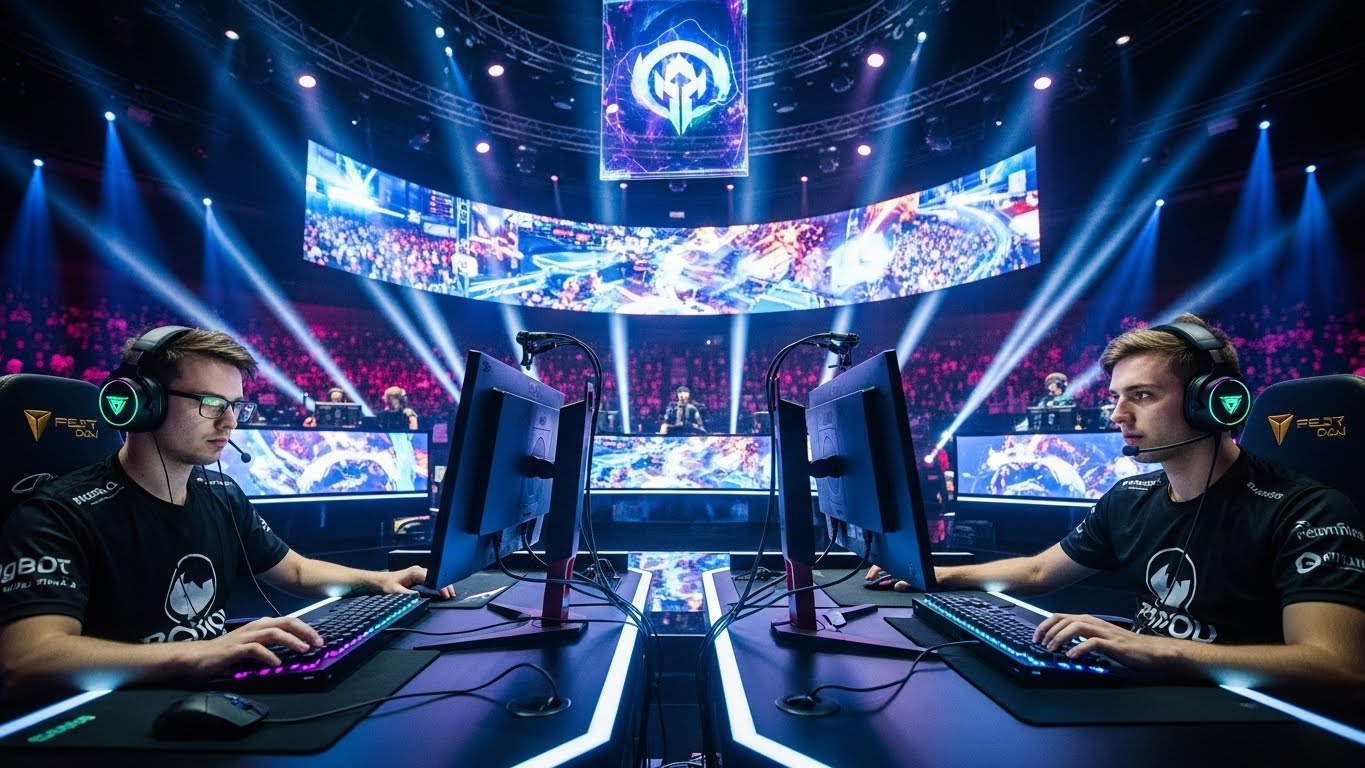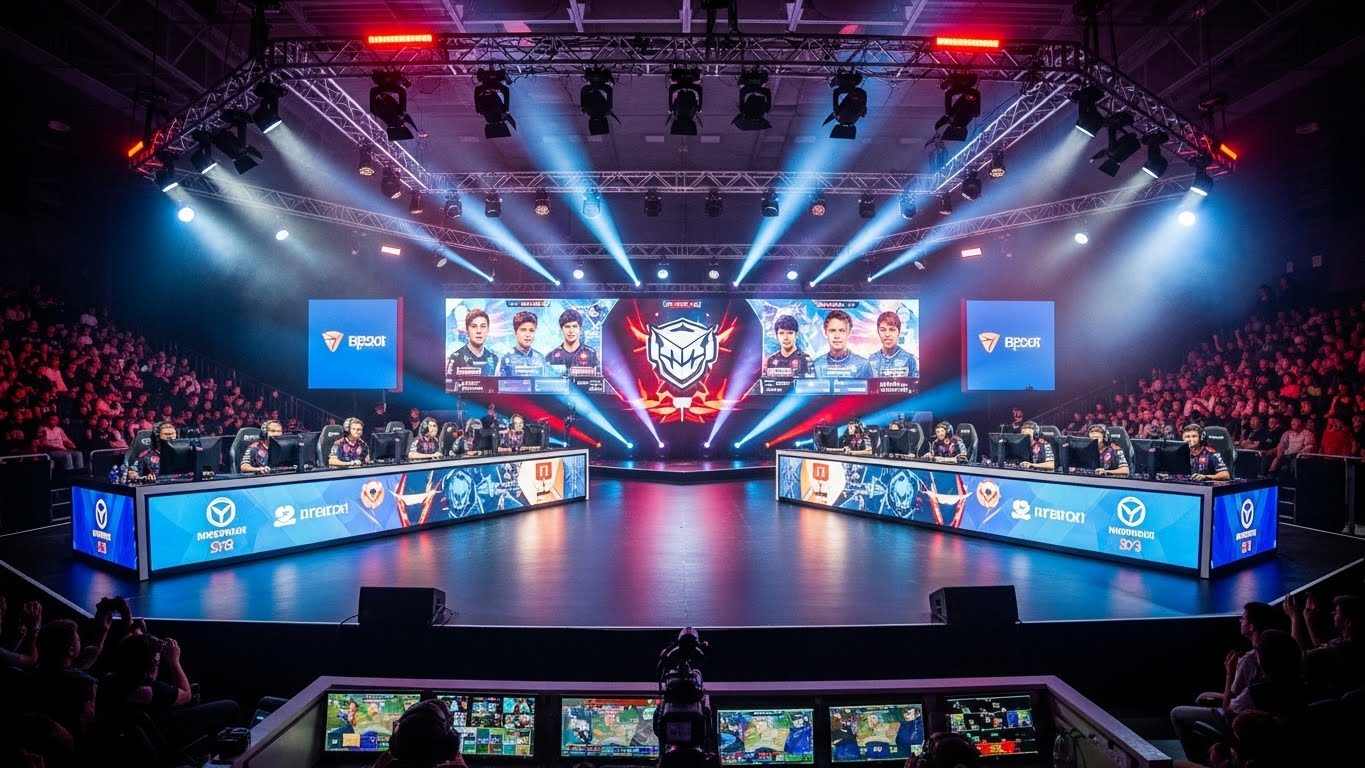
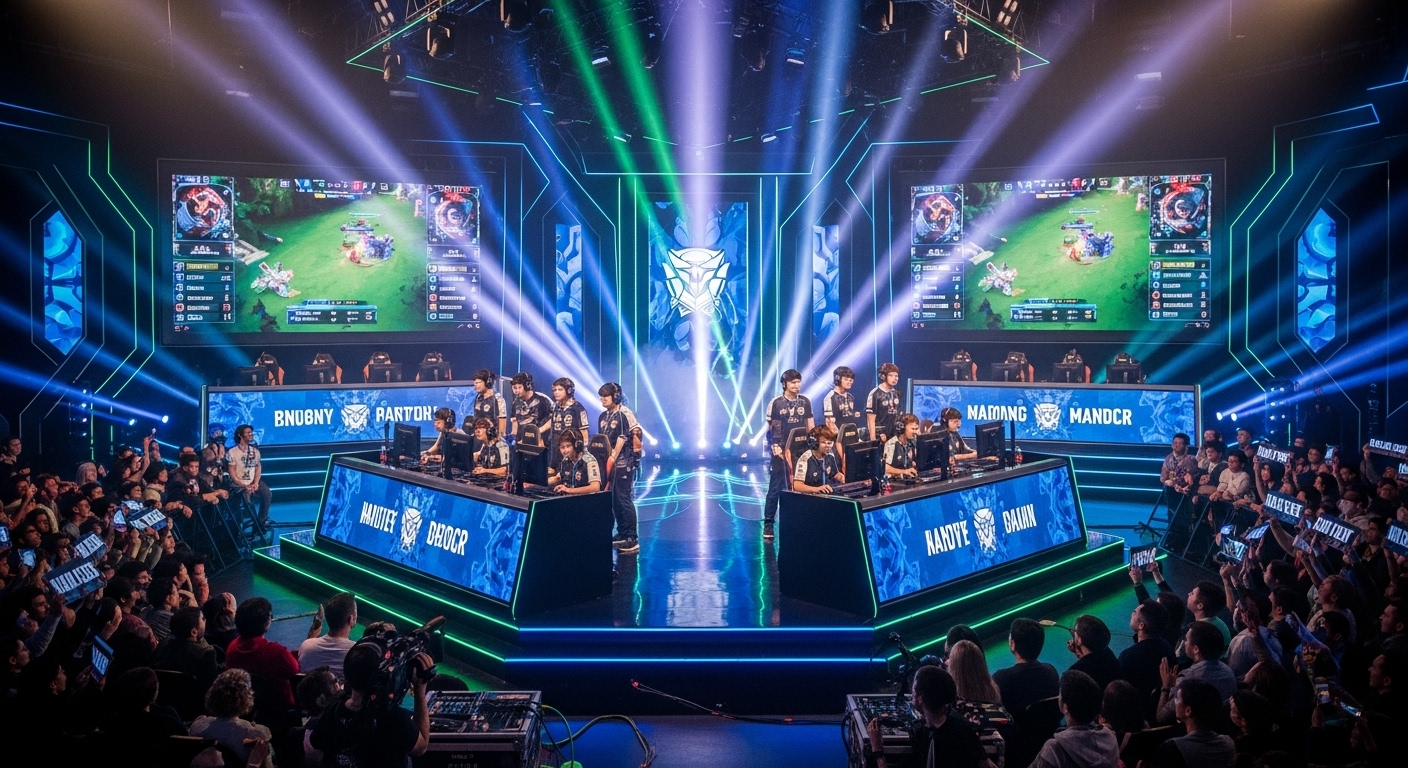
eSports, or electronic sports, has evolved from a niche hobby into a global entertainment powerhouse, with millions of fans, professional players, and massive sponsorship deals. What was once seen as just another form of digital entertainment has now become a legitimate career path, drawing attention from traditional sports, media companies, and major brands. Whether it’s a thrilling League of Legends final, a strategic battle in Dota 2, or a fast-paced Counter-Strike: Global Offensive match, eSports has become a cultural and economic force in the entertainment industry.
In this blog post, we will dive into the history, development, and future of eSports, exploring how it has grown from small LAN parties to sold-out arenas, TV broadcasts, and global tournaments. We will also look at the impact of eSports on society, the technology behind it, and the challenges it faces as it continues to evolve.
The Birth of eSports: Humble Beginnings
While the term “eSports” may seem like a modern invention, competitive gaming has been around for decades. The first significant steps towards what we now know as eSports were taken in the early 1990s, with multiplayer games providing a foundation for organized competition. Before the rise of the internet, competitions took place in local settings, often involving friends and communities gathering for informal tournaments.
One of the first notable examples of organized competitive gaming came in 1997 with the Red Annihilation tournament for the popular first-person shooter Quake. The winner of the tournament, John “Fatal1ty”athan Wendel, took home a Ferrari, marking a pivotal moment for eSports as a serious competitive activity. The prize pool and the media attention surrounding the event were groundbreaking, showing that there was potential for professional gaming as a legitimate career.
The growth of the internet in the late 1990s and early 2000s played a crucial role in the rise of eSports. Online gaming allowed players from around the world to compete against each other without the need for physical proximity. Multiplayer games such as StarCraft, Warcraft III, and Counter-Strike became major titles for competitive play, establishing the groundwork for online tournaments and the creation of early eSports leagues.
The Golden Age: The Emergence of Professional Leagues
By the mid-2000s, eSports had begun to solidify its place as a legitimate industry. The rise of broadband internet made it easier for players to compete in high-level tournaments online, and the advent of live streaming platforms such as Twitch in 2011 allowed fans to watch competitions from anywhere in the world. This period also saw the creation of formal eSports leagues and the establishment of large-scale tournaments that attracted sponsors, media coverage, and professional players.
In Korea, the rise of StarCraft (and its sequel, StarCraft II) transformed the country into an eSports powerhouse. The Korean eSports Association (KeSPA) was established in 2000 to regulate and promote competitive gaming. The creation of television broadcasts for eSports tournaments, along with the rise of dedicated eSports channels, brought competitive gaming into the mainstream. The Korean Air OSL and Proleague became iconic events, attracting huge audiences both online and in-person.
Meanwhile, the success of Counter-Strike as an international competitive title in the West led to the formation of European and North American eSports leagues. These leagues often featured sponsorships from major companies and large prize pools, drawing more professional players and teams into the fold. Tournaments like DreamHack (Sweden) and the ESL (Electronic Sports League) became vital institutions, hosting major competitions and further cementing eSports’ global presence.
In 2011, the World Cyber Games (WCG) and the Electronic Sports World Cup (ESWC) brought together players from all corners of the globe for intense competition, marking the beginning of the truly global eSports scene. This period saw games like Dota 2, League of Legends, Counter-Strike: Global Offensive, and Call of Duty all gain massive followings, creating iconic players and teams that would go on to define the eSports era.
The Explosion of eSports: Mainstream Success and Global Recognition
As the 2010s unfolded, eSports grew exponentially, both in terms of viewership and financial investment. Streaming platforms like Twitch and YouTube Gaming provided the infrastructure for fans to watch live streams of major tournaments, interact with players, and support their favorite teams. The accessibility of live streaming and the emergence of social media helped to connect fans and foster a sense of community around their favorite eSports games and players.
One of the most significant turning points for eSports came with the launch of The International (TI) by the developers of Dota 2. The first TI tournament, held in 2011, had a modest prize pool, but over the years, it became one of the largest and most prestigious events in the gaming world. The prize pool for The International has consistently broken records, reaching over $40 million in 2021, with millions of fans tuning in to watch the competition unfold.
In addition to Dota 2, League of Legends became one of the most popular eSports titles, with its annual World Championship drawing millions of viewers worldwide. LoL‘s developer, Riot Games, played a key role in professionalizing eSports with its well-organized leagues, such as the League of Legends Championship Series (LCS) in North America and the League of Legends Pro League (LPL) in China. These regional leagues helped elevate the level of competition and established a structured path for aspiring professional players to follow.
During this period, eSports also saw significant corporate investment. Major brands such as Coca-Cola, Intel, and Red Bull began sponsoring tournaments, teams, and events. These partnerships helped bring eSports into the mainstream and provided the financial backing needed to expand eSports operations globally. The involvement of big-name sponsors also helped to legitimize eSports as a form of entertainment on par with traditional sports.
Television networks began to take notice of eSports as well. ESPN, Turner Broadcasting, and other traditional media outlets began broadcasting major tournaments, signaling that eSports was no longer just an online curiosity but a legitimate form of entertainment for mass audiences. The 2014 League of Legends World Championship was even broadcast on ESPN2, marking a pivotal moment in the acceptance of eSports by mainstream media.
The eSports Ecosystem: Teams, Tournaments, and Professionalism
One of the key elements of eSports’ success is its professional ecosystem. Just as traditional sports have teams, coaches, analysts, and managers, eSports has developed a similar structure. Professional eSports teams are made up of skilled players who train, strategize, and compete at the highest levels, often with a focus on specific games or genres. These teams sign contracts, receive salaries, and are supported by sponsors and investors.
Top-tier eSports organizations like Cloud9, Team Liquid, Fnatic, and T1 have become household names within the gaming community. These organizations often field multiple teams across different games, creating a brand identity that resonates with fans. In addition to player salaries, teams also generate revenue from merchandise, sponsorships, and media deals. This has led to a professionalization of the sport, with eSports players now enjoying lucrative contracts, team support, and even endorsement deals similar to traditional athletes.
The structure of eSports tournaments has also become more formalized. Leading tournaments such as The International, League of Legends Worlds, Intel Extreme Masters, and Overwatch League now operate with huge prize pools and feature extensive media coverage, drawing attention from fans and media outlets around the world. These tournaments attract top-tier teams and players, as well as viewers who tune in for the high-stakes competition and the sense of community surrounding these events.
The rise of eSports as a professional sport has also led to the creation of educational institutions and academies designed to train the next generation of players, analysts, casters, and event organizers. Many universities and colleges now offer eSports scholarships, and dedicated eSports programs are helping to build a sustainable ecosystem for the industry’s growth.
The Global Impact: Connecting Communities and Changing Careers
eSports has also had a profound impact on communities and careers worldwide. What was once seen as a niche hobby is now an avenue for individuals to connect with others, make a living, and even become international celebrities. The global appeal of eSports transcends geographic boundaries, with players and fans from all corners of the world coming together to share in the excitement of competition.
Platforms like Twitch, YouTube Gaming, and Facebook Gaming have allowed content creators to carve out successful careers by streaming their gameplay, creating commentary, and building large fanbases. Many professional players have transitioned into full-time streamers, with popular figures like Ninja, Shroud, and Pokimane becoming household names due to their combined skills in both eSports and live streaming.
Moreover, the success of eSports has opened up new career opportunities for individuals interested in game design, event management, broadcasting, and content creation. The rise of eSports as a global entertainment medium has created jobs across multiple industries, from game developers to marketing teams and broadcasting networks. What was once a subculture is now a legitimate career path for those passionate about gaming and competition.
Challenges and the Future of eSports
Despite its incredible growth, eSports still faces challenges. The industry is not yet universally accepted as a traditional sport, and many argue that it is still struggling to achieve the same level of legitimacy and infrastructure that physical sports enjoy. Additionally, concerns about player burnout, cheating, match-fixing, and the long-term sustainability of the industry are areas that need to be