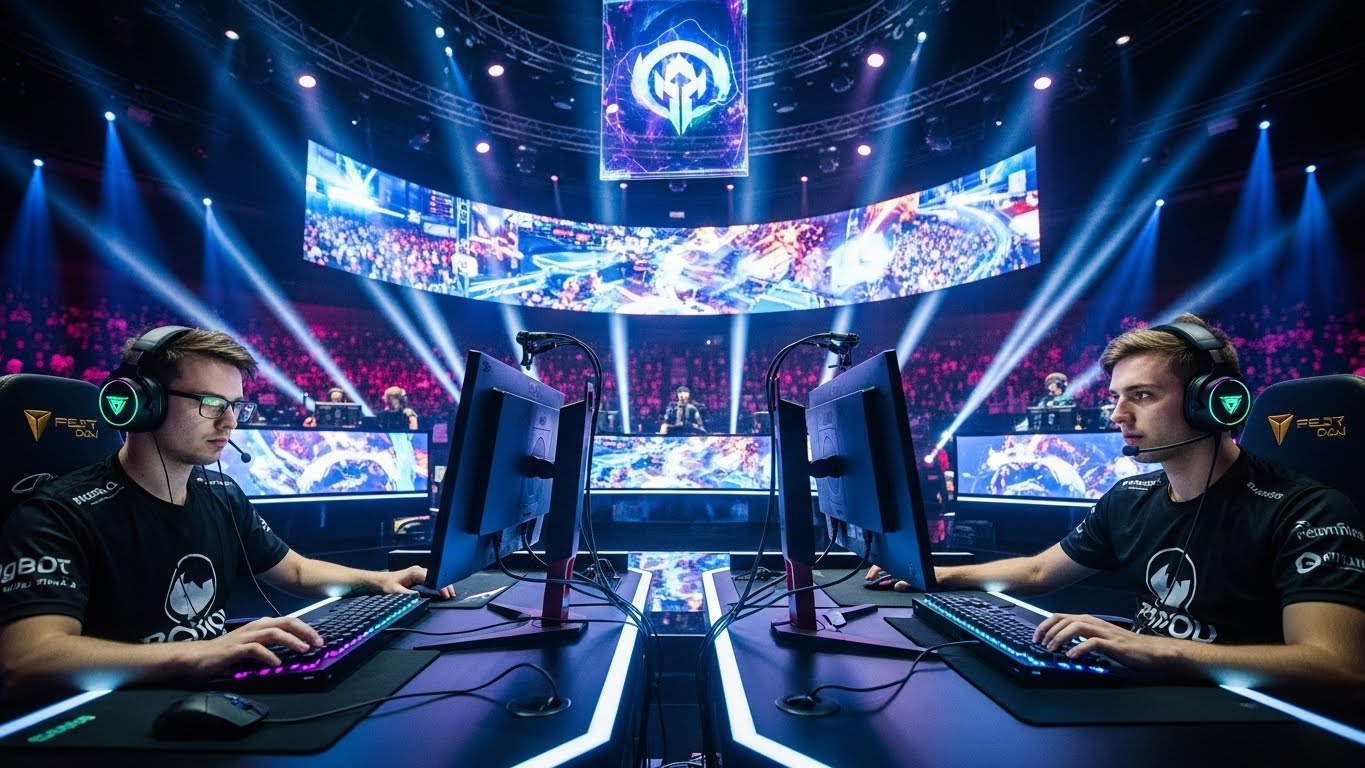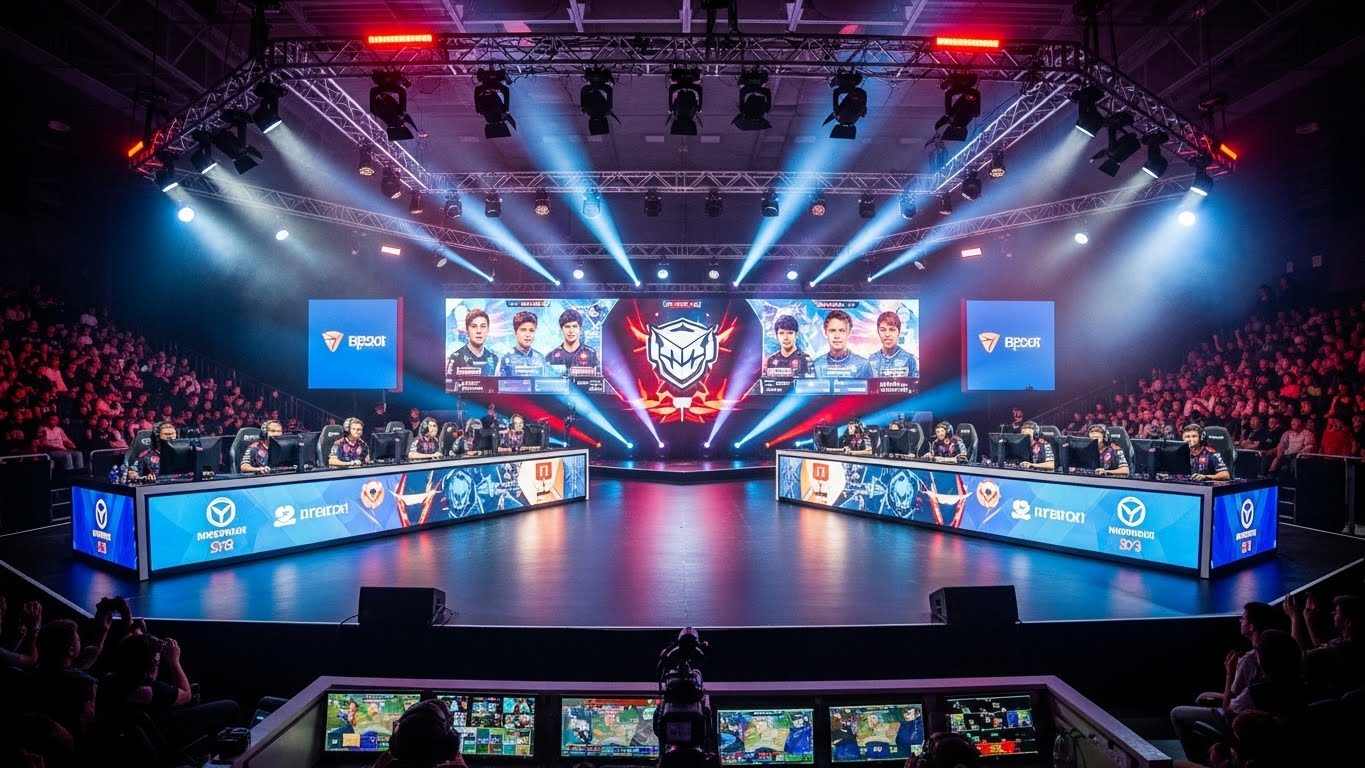
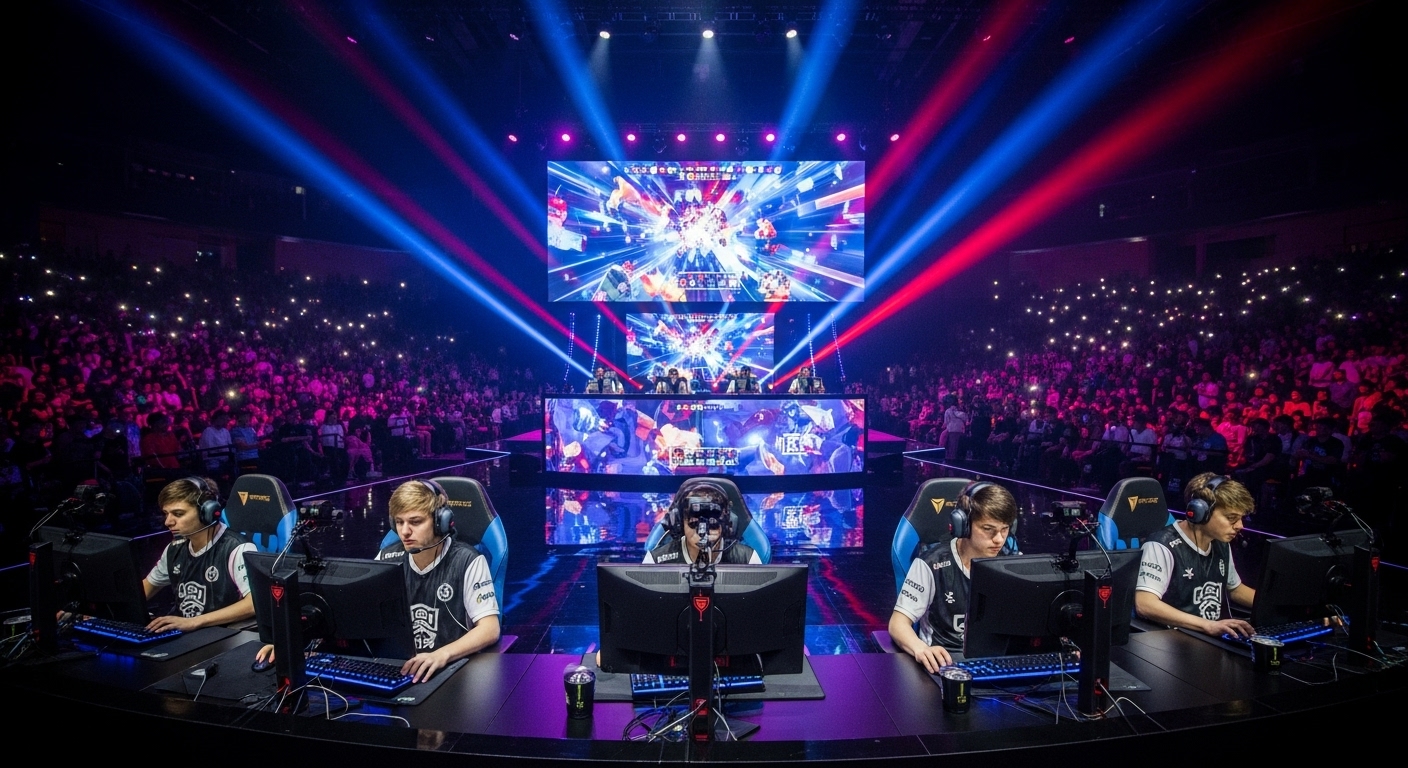
Esports, or electronic sports, has rapidly transformed from a niche interest to a global phenomenon. With its roots tracing back to the 1970s, esports has evolved through the decades, gaining massive popularity as gaming technology advanced and the internet enabled worldwide connectivity. Today, esports represents a multi-billion-dollar industry, captivating millions of fans and players alike. But how did this transformation happen, and what makes esports so special?
In this blog post, we’ll explore the rise of esports, its impact on the gaming industry, the future potential, and how it has established itself as a mainstream form of entertainment.
The Genesis of Esports: From Arcade Games to Global Tournaments
Esports can trace its origins to the early days of gaming. In the 1970s, competitive gaming began with simple arcade games like Pong and Space Invaders. These early contests were modest affairs, typically local competitions held in arcades where players vied for high scores. It wasn’t until the 1990s, however, that competitive gaming began to take a more organized shape.
The first real steps toward modern esports were taken in the 1990s with the rise of online multiplayer games. Titles like Warcraft and Quake introduced the concept of online multiplayer competition, where players from around the world could connect and battle it out. During this period, the first esports tournaments were held, although they were still in their infancy and lacked the structure and global reach we associate with esports today.
The turn of the millennium saw a dramatic shift in how people approached gaming. With the widespread adoption of high-speed internet, PC gaming gained tremendous popularity. Esports organizations, tournaments, and broadcasting platforms began to emerge, setting the stage for esports to become the powerhouse it is today.
The Growth of Esports: A Cultural and Commercial Juggernaut
Esports reached a tipping point in the 2010s, thanks to a combination of factors: technological advancements, the professionalization of gaming, and the rise of streaming platforms like Twitch.
The release of League of Legends in 2009 by Riot Games was a pivotal moment in the growth of esports. The game’s accessible mechanics and engaging team-based gameplay made it an instant hit, especially in the competitive scene. Riot Games recognized the potential of competitive League of Legends and began investing heavily in its esports infrastructure. In 2011, they launched the League of Legends World Championship, an event that would go on to become one of the most watched esports tournaments in history.
As the popularity of League of Legends soared, other games followed suit, creating their own professional esports leagues and tournaments. Games like Dota 2, Counter-Strike: Global Offensive, Overwatch, and Fortnite all built massive followings, leading to the establishment of global events, such as The International (for Dota 2), the CS:GO Major Championships, and the Overwatch League.
The commercialization of esports has been equally impressive. In 2017, the value of the global esports market was estimated at around $700 million. By 2023, that number had risen to over $1.6 billion, with projections indicating further growth in the years ahead. This growth is driven by a variety of factors: sponsorships from global brands, broadcasting deals with major media companies, and the growing influence of streaming platforms.
The Players and Teams: The Rise of Professional Esports Athletes
One of the most interesting aspects of esports is the professionalization of its players and teams. In the early days, esports competitions were often seen as informal events, with little structure or support for players. But as the industry matured, it became clear that esports had the potential to be a full-time career for those with the skill, dedication, and passion for the game.
Today, top esports players are some of the best-paid athletes in the world, with salaries, sponsorships, and prize money driving their earnings. For example, Dota 2’s The International regularly features prize pools in excess of $30 million, with the top players earning millions of dollars in a single tournament. But it’s not just the star players who benefit. Many esports organizations have built entire ecosystems around their teams, providing coaching, management, and even health and wellness programs to help players perform at their best.
Teams like Team Liquid, Cloud9, and Fnatic have become household names within the esports world, signing top-tier players and competing across a wide variety of games. These organizations also play a crucial role in fostering talent through academy teams and youth development programs, ensuring that the pipeline of future esports stars remains strong.
The level of competition is fierce, and players dedicate years of their lives to honing their skills, often training for up to 12 hours a day. Many players, especially in games like League of Legends and Valorant, need exceptional reflexes, strategy, and coordination to succeed. Unlike traditional sports, esports doesn’t require physical athleticism, but it demands mental toughness, sharp focus, and the ability to perform under pressure.
The Esports Fanbase: Connecting Players and Spectators
Another key factor in the success of esports is its fanbase. What began as a small, niche community has blossomed into a massive global fanbase that spans all ages, demographics, and cultures. Millions of people tune in to watch live tournaments on streaming platforms like Twitch, YouTube, and Facebook Gaming, with some events drawing larger audiences than traditional sports.
The relationship between players and fans is unique. Esports fans are incredibly loyal and deeply engaged with the players, teams, and games they support. Unlike traditional sports fans who might only watch the big games, esports fans have the ability to interact directly with players and teams through social media, live streams, and even in-game chats. This interaction has helped foster a sense of community among fans, who feel personally connected to their favorite players and teams.
In addition, the global nature of esports means that fans from around the world can come together to celebrate their shared passion. Whether it’s cheering for a team from another continent or participating in fan discussions on forums, the digital ecosystem of esports enables a level of connectivity that transcends geographic boundaries.
The Esports Economy: A Multi-Billion Dollar Industry
Esports is not just a form of entertainment; it is a thriving business with multiple revenue streams. According to Newzoo, a leading gaming analytics firm, the global esports industry was expected to generate over $1.6 billion in 2023. The vast majority of this revenue comes from advertising, sponsorships, media rights, and merchandise sales.
Brands are increasingly recognizing the value of esports in reaching younger, digitally savvy audiences. Sponsorship deals with major companies like Intel, Red Bull, Coca-Cola, and Nike have become a key component of the esports economy. These brands not only sponsor tournaments and players but also create bespoke marketing campaigns targeted at esports fans.
Media rights deals are another major revenue stream. As esports becomes more mainstream, traditional sports broadcasters and streaming platforms have secured exclusive broadcasting rights for major tournaments. This includes live-streaming rights as well as highlight packages and post-event coverage.
Moreover, esports is also generating significant revenue from ticket sales and merchandise. Major tournaments like The International and the League of Legends World Championship attract tens of thousands of fans who purchase tickets to attend in-person. The rise of esports merchandise—team jerseys, fan apparel, and collectibles—has also become a lucrative industry in its own right.
The Future of Esports: What Lies Ahead?
The future of esports looks incredibly bright. As technology continues to evolve, esports will likely see even more innovations that enhance the gaming experience. Virtual reality (VR) and augmented reality (AR) are areas to watch closely, as they could take competitive gaming to new levels. VR gaming, in particular, could create immersive experiences that blur the line between the virtual and real worlds, opening up new possibilities for both players and spectators.
The potential for esports to become an Olympic sport has also been discussed in recent years. While there are still many hurdles to overcome, such as the need for a universally accepted format and regulatory framework, the inclusion of esports in the Olympics could further cement its status as a legitimate global sport.
In addition, as the esports industry matures, we are likely to see more corporate investment, better player welfare initiatives, and improved infrastructure to support the ever-growing fanbase. It’s also expected that esports will continue to evolve in terms of game genres, with newer games and formats becoming competitive staples.
Conclusion
Esports is no longer just a passing trend—it is a digital revolution in the world of competitive gaming. From its humble beginnings in arcades to becoming a multi-billion-dollar industry with a global fanbase, esports has proven that it is here to stay. As technology continues to advance and the industry grows, we can only expect esports to become even more ingrained in the cultural fabric of entertainment, offering new opportunities for players, fans, and businesses alike.
As it stands today, esports represents a fusion of gaming, sports, and entertainment, and its future seems brighter than ever. Whether you’re a player, fan, or industry professional, there’s no denying that esports is an exciting space to be part of as we enter a new era of digital competition.