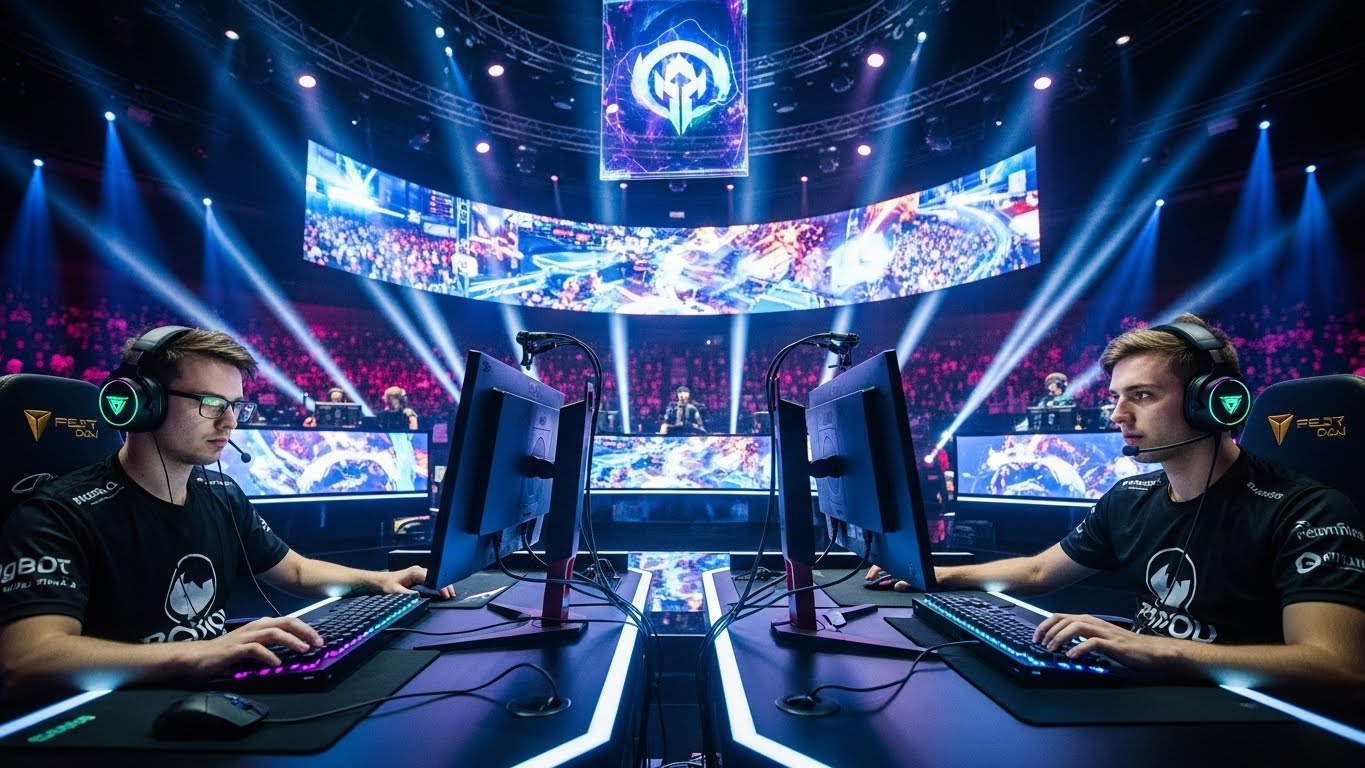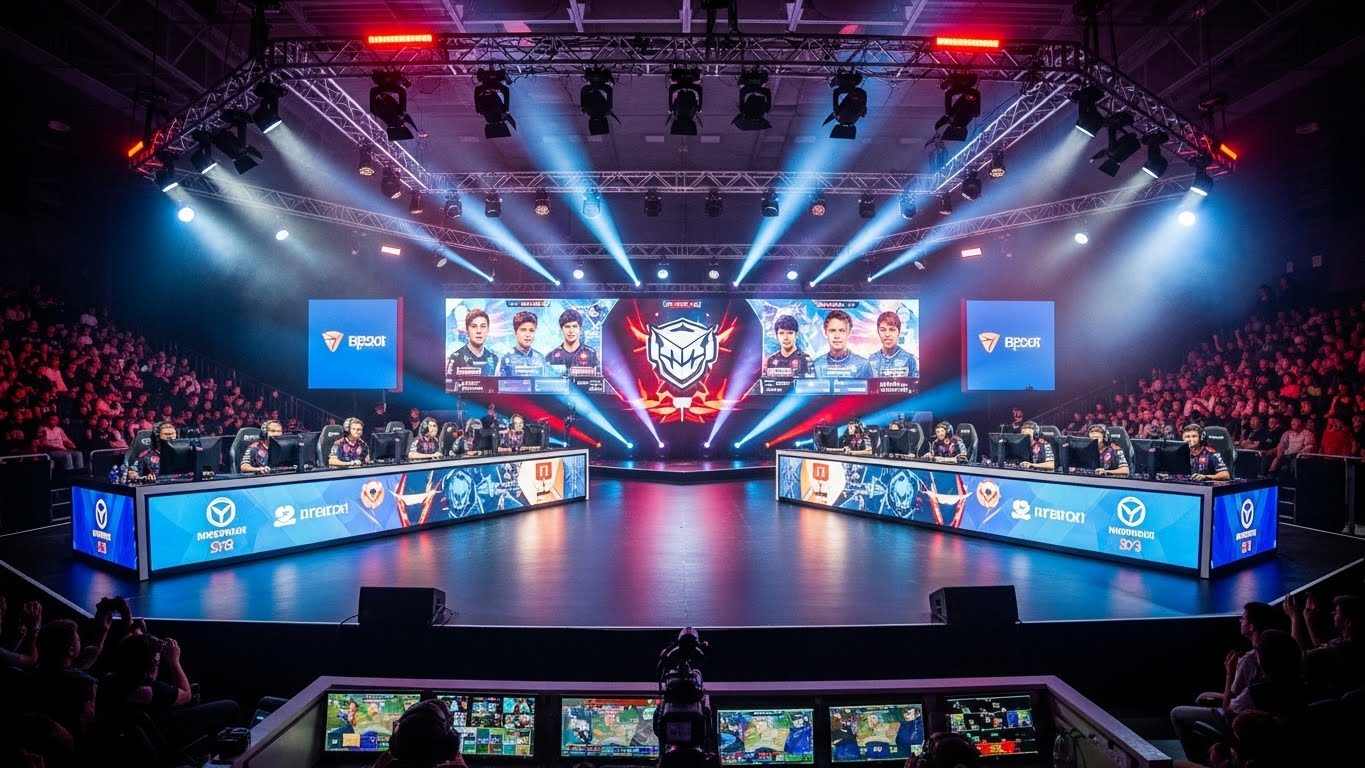
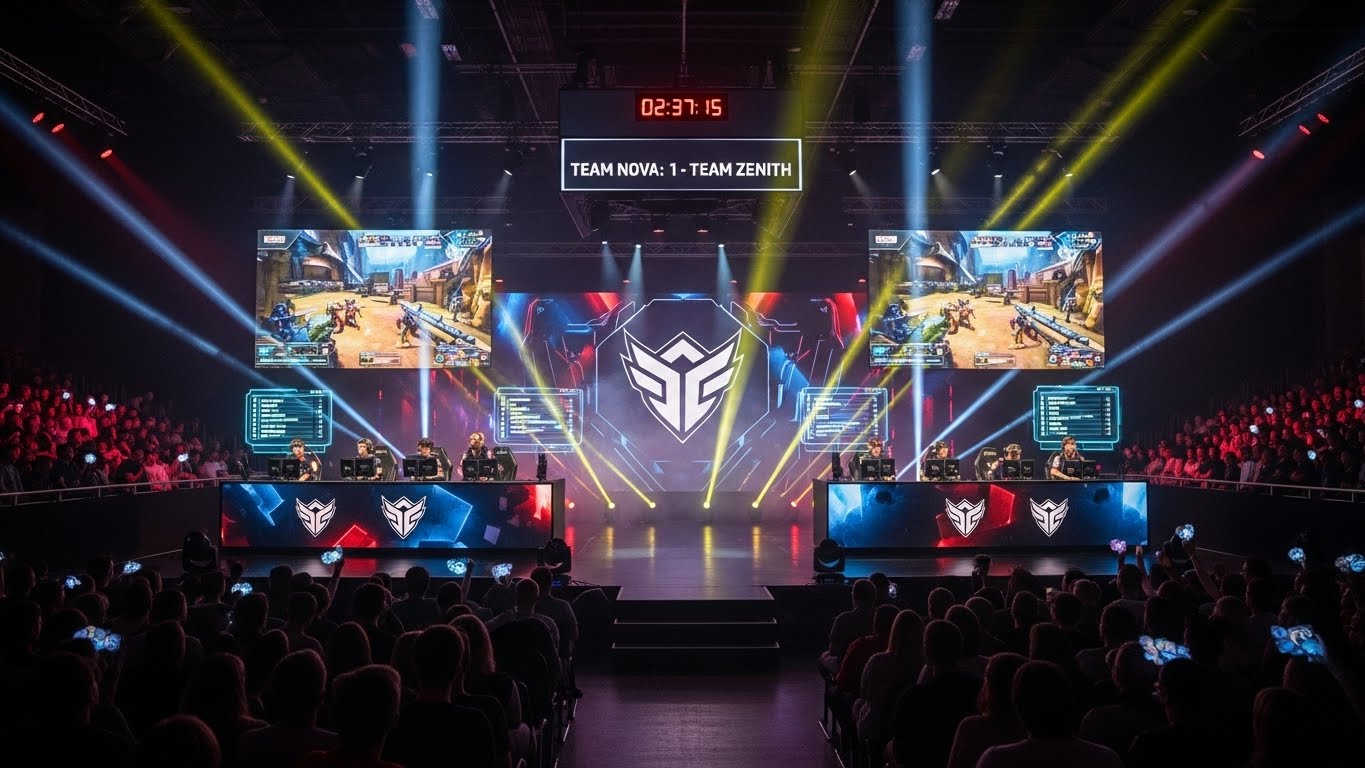
Esports, or competitive gaming, has emerged as one of the most rapidly growing forms of entertainment in the modern world. Once considered a niche hobby, esports has transformed into a global phenomenon, attracting millions of players, viewers, and sponsors. From amateur tournaments in local gaming cafes to massive international championships with multi-million-dollar prize pools, esports represents a fusion of skill, strategy, and digital innovation. In this blog, we will explore the history of esports, its growth, the types of games that dominate the scene, the impact on culture and economy, and what the future holds for this digital sport.
The Origins of Esports
The roots of esports can be traced back to the early days of video gaming. In the 1970s and 1980s, arcade games and early consoles created competitive communities where players would challenge each other for high scores. Events like the Space Invaders Championship in 1980 marked some of the first organized video game competitions, drawing thousands of participants and laying the foundation for competitive gaming culture.
With the rise of PC gaming in the 1990s, esports began to evolve. Games like Doom, Quake, and StarCraft fostered highly competitive communities, where players honed skills and strategies to outperform opponents. LAN parties and local tournaments became gathering points for gamers, creating the early esports ecosystem. This period was crucial in establishing the sense of community, rivalry, and skill-based competition that defines esports today.
The Evolution and Growth of Esports
Esports has grown exponentially over the past two decades. With the advent of high-speed internet and streaming platforms, competitive gaming has become accessible to a global audience. Players no longer need to attend local tournaments to showcase their skills; they can compete online and reach millions of viewers instantly.
The 2000s saw the rise of professional esports teams and leagues. Organizations began recruiting skilled players, offering salaries, training facilities, and sponsorships, mirroring traditional sports structures. Games like League of Legends, Dota 2, and Counter-Strike became staples of competitive gaming, attracting international attention. Major tournaments now offer prize pools in the millions, and winning teams achieve celebrity status within the gaming community.
Streaming platforms such as Twitch and YouTube Gaming further accelerated the growth of esports. Fans can now watch live competitions, interact with players, and follow tournaments in real-time. This has transformed esports into a spectator-driven industry, where content consumption and community engagement are as vital as the gameplay itself.
Popular Esports Games and Genres
Esports encompasses a wide variety of game genres, each with its own competitive scene and fan base. Multiplayer online battle arenas (MOBAs) like League of Legends and Dota 2 are among the most popular, requiring strategic thinking, teamwork, and rapid decision-making. These games feature complex mechanics, multiple character roles, and coordinated team strategies, making them highly engaging for both players and spectators.
First-person shooters (FPS) such as Counter-Strike: Global Offensive, Call of Duty, and Overwatch focus on reflexes, precision, and tactical awareness. Competitive FPS games often emphasize individual skill as well as team coordination, creating high-intensity gameplay that captivates audiences.
Real-time strategy (RTS) games, though less mainstream today, were foundational in esports history. Games like StarCraft required players to manage resources, control units, and outmaneuver opponents strategically, showcasing mental acuity and strategic planning.
Sports simulation games like FIFA and NBA 2K allow players to compete in virtual versions of real-world sports, attracting fans who enjoy the crossover between traditional athletics and digital competition. Fighting games such as Street Fighter and Tekken have also maintained a dedicated following, emphasizing one-on-one skill-based competition.
The Impact of Esports on Youth and Culture
Esports has become a defining element of modern youth culture. Millions of young people around the world not only play video games but also follow esports tournaments and idolize professional players. This cultural phenomenon has created communities, fan bases, and shared identities around specific games, teams, and players.
Esports has also influenced lifestyle and fashion. Professional gamers have become icons, inspiring clothing lines, merchandise, and digital content trends. Cosplay, fan art, and online discussions around esports events further embed competitive gaming into broader cultural conversations.
Additionally, esports promotes cognitive skills, including problem-solving, multitasking, and strategic thinking. Unlike traditional physical sports, esports emphasizes mental agility, reflexes, and analytical thinking. This shift highlights the changing landscape of competitive activities in the digital era, where intellectual and digital skills are as celebrated as physical prowess.
The Economics of Esports
Esports is not only a cultural phenomenon but also a massive economic industry. Revenue streams include tournament prize pools, team sponsorships, streaming subscriptions, merchandise, and advertising. Major tournaments like The International for Dota 2 and the League of Legends World Championship have prize pools exceeding tens of millions of dollars, reflecting the financial scale of esports.
Professional teams and organizations operate like traditional sports franchises. Players receive salaries, sponsorship deals, and performance-based bonuses. Brands from technology, fashion, and consumer goods industries invest heavily in esports to reach younger demographics, recognizing the marketing potential of this engaged and digitally native audience.
Streaming platforms contribute significantly to the economic ecosystem. Fans subscribe, donate, and engage with content creators, generating revenue for both players and platforms. The monetization of esports content has transformed casual gaming into a lucrative career path, with opportunities for both players and content creators to achieve financial success.
Technology and Training in Esports
Technology is at the heart of esports, both in gameplay and training. High-performance computers, gaming peripherals, and low-latency internet connections are essential for competitive play. Players often use specialized hardware such as mechanical keyboards, gaming mice, and high-refresh-rate monitors to maximize performance.
Training in esports is rigorous and structured. Professional players engage in daily practice sessions, strategy meetings, and performance reviews. Teams analyze gameplay using software that tracks movements, decision-making, and reaction times. Mental conditioning, including focus exercises and stress management techniques, is also a key component of training, emphasizing the holistic approach required for elite competition.
Virtual reality (VR) and augmented reality (AR) technologies are beginning to influence esports, creating new forms of immersive competition. These innovations may redefine gameplay, training, and fan engagement in the future, pushing esports into entirely new dimensions.
Esports and Education
Esports is increasingly being recognized as a legitimate educational and career pathway. Schools and universities around the world have started offering esports programs, scholarships, and academic courses focused on game design, management, and competitive play. These initiatives provide students with opportunities to develop skills such as teamwork, strategic thinking, and digital literacy while pursuing their passion for gaming.
Esports also teaches transferable skills applicable to other fields. Leadership, communication, decision-making under pressure, and analytical thinking are all developed through competitive gaming. By integrating esports into educational frameworks, institutions are acknowledging the value of digital competitions in personal and professional development.
Challenges in the Esports Industry
Despite its rapid growth, esports faces several challenges. The intense competition and long practice hours can lead to physical and mental health issues, including eye strain, repetitive stress injuries, and burnout. Ensuring the well-being of professional players is critical as the industry matures.
Regulation and standardization are also ongoing concerns. Unlike traditional sports, esports lacks universally accepted governing bodies to manage rules, player contracts, and tournament regulations. Disputes over cheating, match-fixing, and sponsorship ethics require effective oversight to maintain credibility.
Another challenge is accessibility. While esports is global, access to high-quality equipment, stable internet connections, and professional coaching remains limited in many regions, creating barriers for talented players from developing countries. Addressing these disparities will be essential for the continued growth and inclusivity of the industry.
The Future of Esports
The future of esports is promising and filled with innovation. As technology advances, esports will continue to expand into virtual reality, mobile gaming, and new competitive formats. Increased recognition of esports as a professional career will drive the development of training academies, leagues, and global tournaments.
Esports will also further integrate with traditional sports and entertainment industries. Collaborative events, cross-platform competitions, and hybrid tournaments may redefine how audiences consume competitive experiences. Additionally, advances in artificial intelligence and analytics will elevate strategic gameplay and performance assessment, creating even more sophisticated and engaging competitions.
The growing acceptance of esports in mainstream culture, coupled with its economic potential, ensures that it will remain a major force in the entertainment industry. The lines between digital and physical competition will continue to blur, offering new opportunities for players, fans, and investors worldwide.
Conclusion
Esports has evolved from humble beginnings in arcades and local competitions into a global industry that rivals traditional sports. It combines skill, strategy, and entertainment, creating experiences that captivate millions of players and viewers. Beyond the gameplay, esports influences culture, education, and the economy, highlighting the transformative power of digital competition.
The rise of esports reflects broader societal shifts toward digital engagement, technological innovation, and cognitive skill-based entertainment. As the industry continues to grow, it will redefine how people compete, connect, and experience sports in the 21st century. For players and fans alike, esports is more than a game—it is a passion, a profession, and a cultural phenomenon that shows no signs of slowing down.